Boiler replacement signs are almost always there for a season or two before anything actually fails, and almost always ignored, because a boiler that mostly works is easy to live with. The problem is that boilers rarely fail in August. They fail on the first properly cold morning, when every heating engineer in Doncaster is already booked, and what could have been a planned replacement becomes an emergency one. Here are the signs worth acting on, what each one actually means, and where the line sits between repair and replacement.
Nine Boiler Replacement Signs to Watch For
1. Pressure keeps dropping
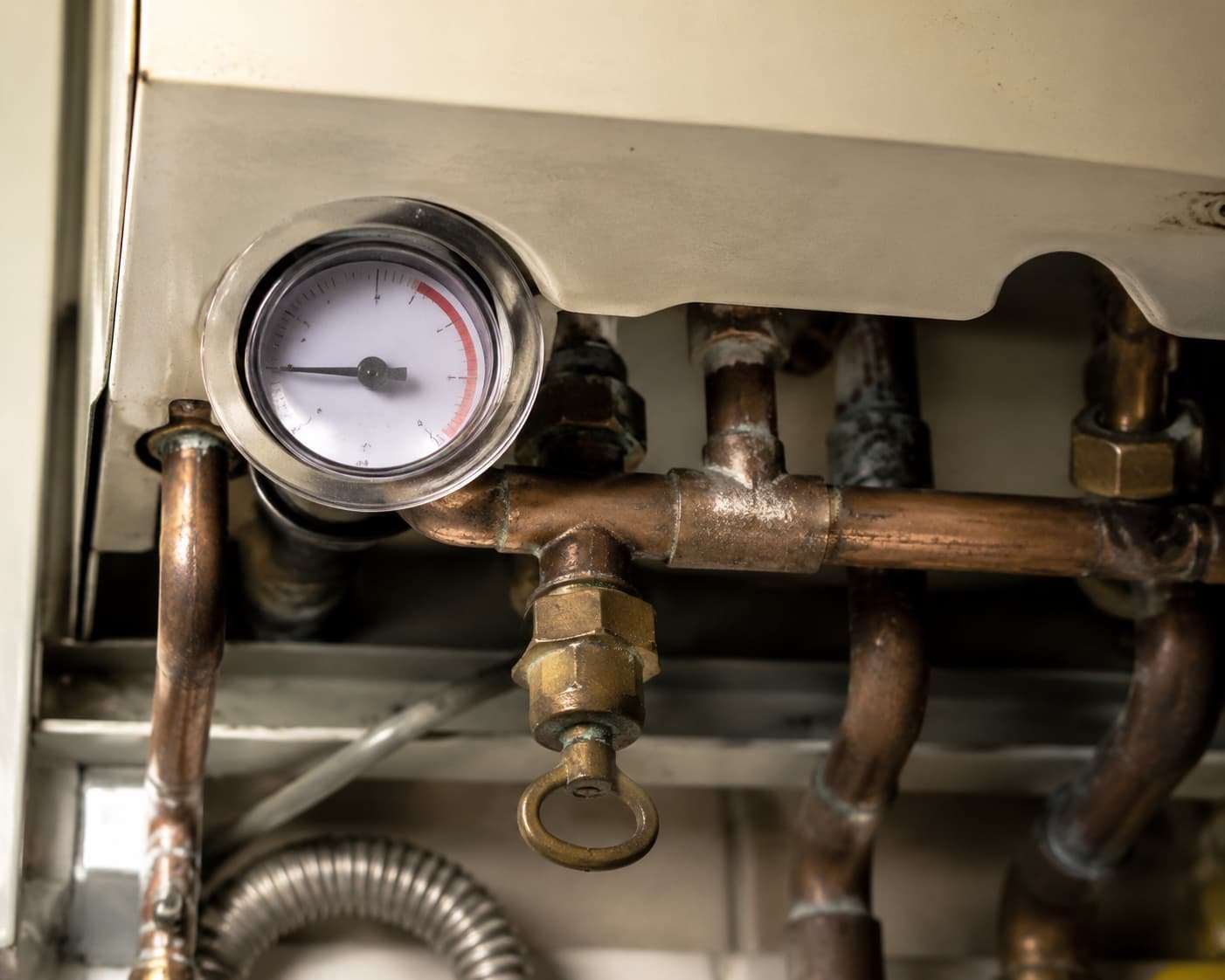
A sealed system should hold pressure for months. If you are topping up more than once or twice a year, water is leaving the system somewhere — a joint, a radiator valve, the pressure relief valve, or a failed expansion vessel that only shows under load.
Topping up is not a fix, and doing it repeatedly makes things worse: each refill introduces fresh oxygenated water, which accelerates internal corrosion and produces the sludge that kills pumps and heat exchangers. This one is worth investigating early because the underlying cause is often cheap to fix.
2. Radiators take much longer to warm
If rooms that used to heat in twenty minutes now take an hour, circulation has degraded. Usually sludge, sometimes a tiring pump, occasionally a system that has never been balanced.
Cold at the top with warm at the bottom is trapped air — bleed them. Cold at the bottom with warm at the top is sludge sitting in the base of the radiator, and bleeding will not touch it.
3. Banging, rumbling or kettling
A boiler should be barely audible. Kettling — a rumbling boil like a kettle coming to temperature — means scale or debris on the heat exchanger causing localised overheating. In the harder water across much of Doncaster this is one of the more common faults we attend, and left alone it shortens heat exchanger life considerably.
Sharp banging on ignition is different and more urgent. It suggests delayed ignition, and it warrants a same-week look rather than a wait-and-see.
4. Hot water goes lukewarm or fluctuates
On a combi, this is usually the plate heat exchanger scaling up or the diverter valve beginning to fail. A shower that runs hot, cools, then recovers is close to a textbook diverter symptom.
Both are repairable and neither is catastrophic on a boiler with life left in it. On a boiler over twelve years old, they are often the first of several.
5. Frequent lockouts and resets
An occasional lockout after a power cut is nothing. Resetting weekly is not. Repeated lockouts point to a fan, an air pressure switch, a flame sensing fault or a PCB beginning to go — and the PCB is the most expensive single component on most boilers.
Note the error code before you reset. It is the single most useful piece of information you can give an engineer over the phone, and resetting clears it.
6. The boiler locks out during cold snaps only
This one is usually good news. A boiler that fails only in freezing weather has very likely got a frozen condensate pipe, and it is often something you can clear yourself: pour warm — not boiling — water over the exposed external section.
If it recurs every winter, the pipe needs relagging or rerouting. That is a genuine repair rather than an annual inconvenience, and it is cheap compared to a callout every January.
7. Visible corrosion, staining or damp
Rust streaks on the casing, staining on the wall behind, or damp around the pipework all mean water has been escaping somewhere for a while. Corrosion on the case itself is a strong replacement signal — it usually indicates a longstanding internal leak rather than a surface issue.
8. Rising gas bills with no change in use
An older boiler running at reduced efficiency uses more gas for the same heat. Comparing bills year on year is imperfect because unit rates move, but a noticeable jump in consumption — not cost — with no change in household habits is a real signal.
9. Two or more repairs in one winter
The clearest sign of all. A single component failure on a well-maintained boiler is bad luck. A second failure in the same heating season usually means the system as a whole is at the end of its working life, and the third one is coming.
Age: What It Does and Does Not Tell You
Ten to fifteen years is a realistic working life for a well-installed, annually serviced boiler. But age on its own decides nothing.
A fifteen-year-old boiler with a full service history, correct output for the property and a magnetic filter fitted can have several good years left. An eight-year-old boiler that has never been serviced, sits on unflushed pipework and was undersized on installation can be beyond economic repair. Service history matters more than the date on the label.
What does override everything is parts availability. Several boilers still in use across Doncaster homes are no longer supported, and once a critical component is unobtainable the repair conversation ends regardless of the boiler’s condition. If yours is an older model, it is worth asking whether parts are still current — before something fails, not after.
The Repair or Replace Threshold
The rule we apply: if the repair costs more than roughly a third of a replacement, and the boiler is over ten years old, replacement usually makes better financial sense. Below that threshold, repair.
Two things should shift you firmly toward replacement regardless of the arithmetic. A heat exchanger failure, because it is the most expensive part and its failure often signals wider system problems. And obsolete parts, for the reason above.
Two things should shift you toward repair. A boiler under eight years old with a single clear fault. And a boiler still inside a manufacturer warranty — check before paying for anything, because a documented service history may mean the repair costs you nothing.
Any quote worth having gives you both figures side by side. A quote that only offers replacement is not a diagnosis. Our boiler repair and boiler installation pages set out the typical costs on both sides so you can compare before anyone visits.
Signs That Mean Stop and Ring Someone Now
Most of the above can wait a week. These cannot.
- A smell of gas. Do not touch electrical switches. Open windows, turn the gas off at the meter, leave the property and ring the National Gas Emergency Service on 0800 111 999.
- A yellow or orange flame instead of crisp blue. Indicates incomplete combustion.
- Black sooty marks or staining around the boiler casing. Same concern.
- A carbon monoxide alarm sounding. Ventilate, leave, ring the emergency number.
- Headaches, drowsiness or nausea that improve when you leave the house. Take this seriously and get medical advice as well as an engineer.
Carbon monoxide is odourless, which is precisely why an audible alarm matters. If you do not have one fitted near the boiler, that is a ten-pound purchase worth making today regardless of your boiler’s age. The Gas Safe Register publishes guidance on warning signs and on checking that any engineer working on your gas appliances is properly registered.
The Cheapest Thing You Can Do
An annual service costs less than a single breakdown callout and catches most of the faults above while they are still cheap. It also keeps your manufacturer warranty valid — almost every warranty on the market is conditional on documented annual servicing, and a missing year on a boiler that then fails is exactly when a claim gets declined.
Autumn is the sensible time, before the heating goes on properly and before everyone else joins the queue in November.
Getting a Straight Answer
If two or three of these signs sound familiar, book a survey rather than waiting to see. We cover Doncaster, Bentley, Armthorpe, Mexborough and the surrounding villages, and the survey and written quote are free with no obligation.
If the honest answer is that your boiler has years left in it, that is what we will tell you. If it does not, you will have both figures and time to decide — which is a considerably better position than deciding in February with no hot water.